Showing posts with label NYC. Show all posts

Sunday, December 21, 2008

Policy Collection ~ Presidential Automotive Emission Suggestions, New York City Organic Waste Collection Suggestions, & Personal Reflections

This is my final policy paper... It started as an NYC program on organic waste management, then moved to a federal piece on automotive emissions standards. Neither was of real interest to me, which is my bad for bending to fit in with the group overall.


Policy Collection ~ Presidential Automotive Emission Suggestions, New York City Organic Waste Collection Suggestions, & Personal Reflections

Presidential Automotive Emission Suggestions

My presidential policy focused on a wide scale massive increase in automotive fuel efficiency from three main cores: public transit, new production personal automobiles, and retrofits to existing vehicles. Making a solid effort at the daily use patterns of every citizen will pave the country for the understanding necessary to make other personal changes. It also will make a direct stab at the inarguable flow of carbon dioxide into the atmosphere responding to the fact that the United States is responsible for the largest portion of emissions worldwide. The following is the submission as part of the group project focus aimed at incorporating green initiatives into American life as a mandate with a high standard for change.

Efficiency: More Efficient Vehicles
President-elect Barack Obama will need to expediently transition the nation to new and existing alternative energy sources. For this policy to be successful, it will need to address the fleet of existing American automobiles as well as new production models, all while making these options financially feasible for citizens, as well as the currently slumping oil-dependent automotive industry. Currently there are approximately 250 million automobiles using United States infrastructure that can be transitioned to alternative fuels via electricity, hydrogen and biofuels. Appropriating funds in the direction of retrofitting the existing fleet as well as producing new vehicles will exponentially emphasize the impact of a move towards alternate fuels while remaining economically feasible.

The most efficient way to deal with this move towards automotive-based carbon neutrality is to create task forces for both public transit and personal automobile use. Public transit funding can create public works-like programs that incorporate spurred employment with a branching infrastructure meant solely for urban and regional transit programs throughout the country in cities and regions identified as target populations in need of public transit options. Mandating that all of the public transit sources use carbon neutral or flex fuel options aimed to wean many citizens from automobile dependence, and conversely, national oil dependence.
In addition, a mandates necessitating that all new passenger vehicles are flex-fuel the end of 2012 should be enacted immediately. Emphasis on developing technology to update many of the popular car models in existence would be needed in funding appropriations. Adjusting current pending legislation of fuel economy standards of 35 miles per gallon by 2020 should be extended to 50 miles per gallon for SUVs and all trucks and 65 miles per gallon for all other passenger vehicles. This will benefit a move towards dependence upon cellulosic ethanol and biofuels from grasses, straws, and non-kernel corn cellulose in substitute for gasoline. Tax-wise, retooling tax credits and loan guarantees for domestic auto plants and parts manufacturers should aim towards developing vehicle technology that uses lightweight materials and redesigned engines.

Additionally, abolishing the 60,000-unit-per-manufacturer cap on buyer tax credits will spur supply and demand of flex-fuels vehicles domestically for consumers currently seeking flex-fuel.

New York City Organic Waste Collection Suggestions

Originally, when assigned to come up with a policy proposal, the assignment enabled us to choose city, state, or federal programs that we personally felt should be created and after newly elected officials transitioned into office. The idea was that programs would make communities, states, or the country more sustainable or raise the focus of sustainable living via programming that would lead to voluntary behavior changes. Personally, I feel that pilot programs with high visibility and basic infrastructure work the best in an urban setting.

Think Piece: Policy Implementation Ideas for Sustainability: Citywide Composting (NYC)

New York City could enjoy measurable benefit from a fairly basic urban agriculture program seen in other urban settings. These are programs that are implemented on a very local basis to promote community and sustainable values that can create not only economy but also education for the city. They are taken from San Francisco programming which is shown to be successful and can be translated to the urban spaces in New York City with minimal funding when compared to landfill and other resource costs.

San Francisco has long taken action in recycling consumer materials and is now taking further steps by including composting in their sanitation services. The green bins are placed with trash bins and hold all compostable materials that are then taken to city composting facilities in northern California. An estimated over 300 tons of organic material are collected daily reducing landfill needs and increasing economy utilizing the compostable outcome, hummus, in California agriculture. The New York City Department of Sanitation claims a lack of funding and manpower for such an endeavor and makes referrals to other community and ecology groups in the city, which do compost on very small-scale settings. The DSNY has formed the New York City Compost Project to do these some of these things as well as to educate. While this referral is helpful, it is very limited in the reach of education and does not successfully engender the public to begin thinking about their refuse and how to make it work for them or the city at large.

Beginning pilot programs in different high density zip codes (or sanitation routes) to test the merits of a citywide composting drive would bring notice to the need for this service as well as acclimatize citizens to be more aware of their refuse. Incentivizing restaurants to participate as well would make a sizable dent in food refuse. Organizations such as City Harvest already procure unused edible food collection, therefore, there is no reason why inedible food collection could not be collected by Sanitation Department workers (enabled as part of such a pilot program).

The New York Sanitation Department already recognizes groups making composting more translatable to the average person. The Lower East Side Ecology Center facilitates personal composting clinics giving subsidized materials to attendees. While this subsidized funding is certainly necessary, it is no way feasible to conquer or address the mounting problem of refuse in the city and the need for landfills to contain it. Looking at an urban program like that in San Francisco would show the feasibility of a similar program in an urban center like New York City and make active steps towards a solution.

Sources:
San Francisco Recycling
San Francisco Environmental Organization
Sunset Scavenger
New York City Compost Organization
Wasteless New York City
NRDC Recycling

Personal Reflections

Firstly, I would like to say that I think these policies may have been far more productive if they had not been so team influenced. I would have felt freer to do a topic which did not fit so well in with that of my group if I had not needed to tie my goals into theirs. I feel this unintentionally limited the areas we could work with reminiscent of how PlaNYC 2030 has no public health aspect. Basically, my group had me change my focus to fit in better in the instructed overall plan. My ideal national focus would have been on food and water security through water use in agriculture. In theory, this change in agricultural strategies could be stretched to relate to a lessening of fossil fuels used and carbon dioxide emitted in the use of machinery and transport, however, I believe that our national and local water strategies need a serious overhaul, perhaps even more stringently than our oil dependence.

Another federal idea was to focus on obesity through a sin tax system interlocked with insurance surcharges and a simultaneous resurrection of The President’s Physical Fitness Challenge. With the media support of this president and his and his wife’s personal fitness goals, I feel this program could make the obese feel accountable for their personal weight choices. They would begin to see that even if they do not feel they need a change, the rest of the country should not absorb their increased expense cost for health care for the average citizen. This would benefit those who could not currently manage affordable health care insurance by making their choice of healthier lifestyles a reflection in cost. The President’s Physical Fitness Challenge would then give school-aged children an outlet for working on their own fitness, teaching them goal setting and giving them a feeling of physical achievement through competing with their peers in a positive setting.

Also, having a group of eight people was detrimental to all of our work, making us change fundamentals of our individual programs to tie them together. I understand that in real policy teams, there are potentially larger numbers of participants, but this did not benefit our group. We really should have organized ourselves into two smaller groups. Many of the polish points were lost in our presentation and group paper due to this fact. I also would have liked to have had some focus in class on policy writing, on the fundamental drafting of policy briefs. I feel this would have been beneficial to everyone and would have made our work more focused on the planning and less focused on figuring out if we were drafting documents correctly. Formulating ideas for policies seem to be moving along more fluidly, however, despite this.

Thursday, December 18, 2008

LMS Post ~ New York State Green Lights Eminent Domain in Manhattanville

How better than to celebrate the end of Law class than to see an example of eminent domain right here in NYC?!? Oh, the irony...


New York State Green Lights Eminent Domain in Manhattanville

At a news conference this morning, the Empire State Development Corporation unanimously voted to use the power of eminent domain to seize the remaining commercial holdouts in Columbia's Manhattanville expansion zone. That's bad news for the two property owners who have still refused to sell: storage space owner Nick Sprayregen and gas station owner Gurnam Singh, who can now legally be forced to sell their property to the state, which would then let Columbia take over the land.

Sprayregen, the far more vocal of the pair, has vowed to fight the eminent domain decision in court, having already entered several different lawsuits challenging whether Columbia's acquisition of the land will actually help the "public good." "I don't want to have to sue you," said Sprayregen's lawyer, Norman Siegel, to the staid ESDC board members. "You leave us no choice but to litigate." He said he felt sure the case would reach the Supreme Court, where ESDC's awkward history with AKRF and previous allegations it was colluding with Columbia would be weighted heavily.

For Columbia, though, today's decision marks the end of several years spent pushing its Manhattanville expansion through various government approvals, and the beginning what's likely to be several years of tussling with Sprayregen.

Though the Singhs have been reclusive throughout the process, they attended the meeting today and spoke through their 17 year-old daughter, Aman Kaur. "I'd appreciate it if everyone put down their BlackBerrys and listened to what I have to say," she began, going on to describe her family's 15-year history in the neighborhood. The two gas stations the family owns are their sole source of income, and Kaur wondered how her parents, immigrants from India, would make a living or pay for her to go to college. "I am literally begging the state for these properties. This is my past, my present, my future," she said.

In their comments, many of the plan's critics expressed a sense of resignation. "It's very clear to me that this is an exercise in futility," said one. "Your decision is virtually already 100% made," added another. A representative from the West Harlem Local Development Corporation (LDC) asked the ESDC to consider pushing back the vote until Columbia and the LDC signed the community benefits agreement.

Though Columbia already owns over 80% of the property in its proposed expansion zone, it says it needs the land under the Singh and Sprayregen properties to construct a 7-story underground structure that will house a bus depot, parking, loading docks, and utilities.

The decision comes seven months after the ESDC approved Columbia's expansion plan and declared the area "blighted," and a year after the city's Land Use Committee approved the plan. Check out our past coverage for more background on Manhattanville.


Manhattanville for Dummies:

Community Board 9 (CB9): a group of West Harlem (Hamilton Heights, Manhattanville, and some of Morningside Heights) residents and business owners who applied to the Borough President's office and were selected to represent their neighborhood.

Local Development Corporation (LDC): Because CB9 doesn't have the power to negotiate with developers, the city created the West Harlem LDC. It's a group of CB9 members, public housing tenants, environmentalists, artists, and elected officials who meet regularly to decide what they want from Columbia in return for the expansion.

Community Benefits Agreement: This is what the LDC is working for. It's an agreement that will decide how much Columbia will put into an affordable housing fund, what environmental standards it will use, how much funding it'll give to the arts in Harlem.

LMS Post ~ Half New Yorkers Struggling to Pay for Groceries, Study Finds

This is not a shock. I worry especially in the elderly segment of the population. Younger adults can get out and try to find work and rely on schools to feed your kids and welfare, etc., etc., but when you are on a very strictly fixed income and not that mobile, like the elderly, you are really screwed. Also, I find the statistics interesting on college students, as should all of you.

This is depressing, when I get back in January, I am going to work with Mimi to get the LEAP group organized for anyone who wants to volunteer at City Harvest. Let me know if anyone is interested.


Half New Yorkers Struggling to Pay for Groceries, Study Finds

A report released Tuesday by the Food Bank for New York City has found that approximately four million New Yorkers—one in two—are having trouble paying for groceries, a 26 percent increase since the last survey in February. The Hunger Experience 2008 Update also found that college degrees are increasingly useless protection against indigence; one out of every three (36 percent) NYC college graduates had difficulty affording needed food this year, up from 11 percent in 2003. Lucy Cabrera, the food bank's president, says, "The results of this report are devastating. These numbers should be a wake-up call for all New Yorkers." The Food Bank NYC sources and distributes food to the estimated 1.3 million New Yorkers who rely on emergency food. Today you've got until noon to help the Food Bank by bidding on one of their cool celebrity decorated lunchboxes. (Just please don't outbid us on Mike D's Jacob the Jeweler box.)

Wednesday, December 17, 2008

LMS Post ~ Uproar Over Paterson's Budget Suggestions

I have no problem with the taxing of unnecessary consumer goods since it will help people be a little more frugal in their habits. I also, as a dietitian, welcome the taxing of non-diet sodas as we are knee deep in diabetics and obese citizens (and illegals) relying on taxpayer-funded healthcare in this city and state. I eagerly await health statistics in the next year to see if this makes a dent in obesity related disease claims in the city. I don't think it will be huge, but it would be really nice.


Uproar Over Paterson's Budget Suggestions


Governor David Paterson's budget proposal that includes a big cut to education funding and a variety of taxes and fees gets worked over. The Daily News, which called it a "slash-and-burn budget," points out, "The proposal, which needs legislative approval, did not include broad-based income tax increases, but relied on smaller ones"—specifically 137—"to raise $4.1 billion from cash-strapped New Yorkers." The head of the State Conservative Party, Michael Long, said of things like reinstating the sales tax on clothing under $110 and taxing spirits, wine and regular soda, "You're sending notice to the people of New York that we really don't want you here. The governor proposed flat spending, but why not actually cut the budget before raising taxes and fees?"

The Empire Center for New York State Policy's E.J. McMahon tells Politicker NY, "Nothing gets the couch potatoes off the couch like taxing their TV. he thing about those tax increases is, the irony of nuisance tax stuff that, is that economically they're utterly insignificant. Politically, obviously there's nothing worse. There are people who wouldn't blink at a massive confiscatory tax on business, but eighteen cents on a bottle of soda and they go nuts." And the Post's Albany bureau chief Frederic Dicker was unimpressed with the "lack of creativity in Paterson's proposal - no significant work-force downsizing, no real lifting of regulatory burdens" and with Paterson's delivery:

Whereas Cuomo, a national-class orator, inspired the state to tighten its belt and fork over more taxes as it faced a calamitous economic down turn in the early 1990s, Paterson delivered a flat and sometimes awkward budget presentation.

"So I want us to be optimistic," Paterson declared at one point. "I think we can come back to Albany, we can take responsibility, we can take control of this budget, we can take over 'Saturday Night Live.' "

Take over "Saturday Night Live"? Paterson appeared with that odd observation to be more focused on the nasty and embarrassing portrayal of him on NBC than he was on the state's dire financial straits.

And Mayor Bloomberg said that more city layoffs might be on the way, since NYC could lose up to $1 billion in the governor's proposal.

Tuesday, December 16, 2008

First Snow in Harlem...Doesn't Last, However, the Photos Are Nice

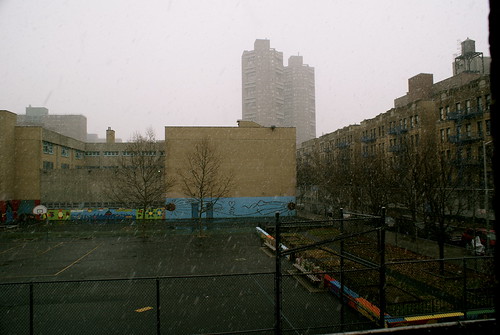
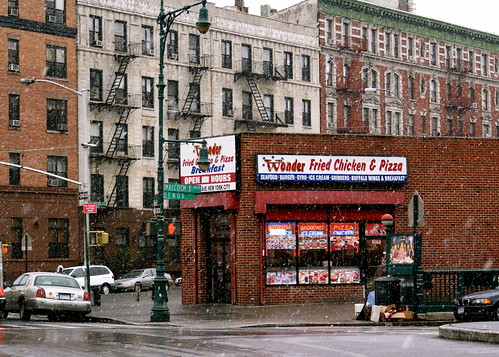
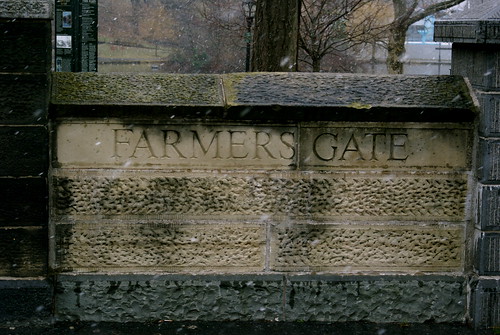
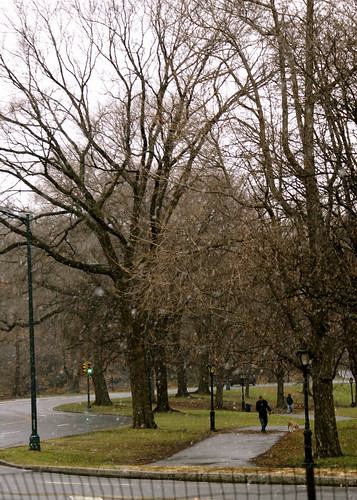
It started snowing, I grabbed my camera, took some photos from my office, and then ran outside. I wish I knew more about photography so they actually looked a little more like snow. however, I liked these ones and that's good enough for me. Also, I have a thing for ducks. Please to enjoy...

Sunday, December 14, 2008

LMS Post ~ NYC Parks Department Counts Central Park Birds

This made me think of Hilary Brown... Who wants to blow off law with me tomorrow and go count some rusty blackbirds?

NYC Parks Department Counts Central Park Birds

NEW YORK (AP) ― Central Park is for the birds but how many of them?

The New York City Parks Department is conducting its annual count of its feathered friends in the Manhattan park on Sunday.

Last year, at least 7,771 birds were counted living there. The year before, there were about 6,400.

Teams of citizen bird watchers and park rangers are assigned to zones within the park's 843 acres. They identify and count every bird they can find. They then gather to share, analyze and tally their findings.

The Christmas Bird Count has been held annually since 1900.

Recent counts have turned up several species uncommon or rare for this time of year, such as rusty blackbirds. NEW YORK (AP) ― Central Park is for the birds but how many of them?

The New York City Parks Department is conducting its annual count of its feathered friends in the Manhattan park on Sunday.

Last year, at least 7,771 birds were counted living there. The year before, there were about 6,400.

Teams of citizen bird watchers and park rangers are assigned to zones within the park's 843 acres. They identify and count every bird they can find. They then gather to share, analyze and tally their findings.

The Christmas Bird Count has been held annually since 1900.

Recent counts have turned up several species uncommon or rare for this time of year, such as rusty blackbirds.

Thursday, December 11, 2008

Just in Time for the Holidays

A bomb scare at 25 Broad Street... The tree almost makes it seem novel.


dietrich on flickr

Wednesday, December 10, 2008

Thursday, December 4, 2008

LMS Post ~ Paterson Recommends Less Severe MTA Fare Hike-- And Tolls for East River Crossings

More MTA news, this a little less severe that what had been initially proposed to help the ailing system. I find it interesting that many of the tolls are to hit up the east river commuting... And I am a fan of taxing those who just come in to work and play while Manhattan residents foot heftier bills.


Paterson Recommends Less Severe MTA Fare Hike-- And Tolls for East River Crossings

With the MTA in dire financial straits, there's been lots of talk about ways to save the MTA, from a 23% fare hike and service cuts to tolling the now-free bridges over the East and Harlem Rivers. Now, Governor Paterson is reviewing a plan with recommendations on how to help the MTA and likes the ideas it offers so far. The plan, submitted by the Ravitch Commission, will be made public today, but the ideas apparently include:

  • An 8% fare increase (vs. the 23% on proposed earlier)--it's unclear how that would impact subway/bus base and unlimited Metrocard fares.
  • Tolls for the East and Harlem River Bridges
  • A corporate payroll tax, paid by businesses in the region, of less than 1%.

While it's unclear how lawmakers might react to a corporate tax (and some "told the Post that the idea was a non-starter"), Paterson said, "As an alternative to a fare hike, I think it's very viable.. [the commission] found a way to reduce the fare increases to 8% by distributing the responsibility among all those who use the service." He added, "We are in a very difficult fiscal time, and so it's either going to be fare hikes, or it's going to be tolls and a combination of payroll taxes."

Wednesday, December 3, 2008

This Photo...

This photo (found on gothamist via flickr) struck me as how I often would be seen in NYC...that is if I went out more. Semi-conservative exterior, standing alone near the lights but not in them, trying to look busy by fishing in my bag, checking my watch/phone, etc.

It just struck me, that's all.

LMS Post ~ NYC Restaurant Immigrant Employee Activism News

Rats, the LMS ate everything I originally wrote. In short word: This is an ongoing case of immigrant employee mistreatment going on in NYC in the restaurant industry, namely Saigon Grill. Some of you may or may not have seen the boycotts there and/or heard of this. Until it hit the news, 99% my takeout came from there because it was cheap and got there in record time, which made sense once it was reported that deliverypeople were fined for not being as fast as humanly possible. However, it is a good example of immigrants demanding better from their employers in the form of a living wage and decent treatment and they actually won a class action lawsuit recently to that end.

It is just a solid example of immigrant activism and persistence for better working standards and a sad commentary on the fact that this even has to happen in NYC.

Saigon Grill Owners Arrested, Charged With Felonies

By John Del Signore

Police have arrested Simon Nget, a Cambodian refugee who built a thriving Vietnamese restaurant mini-chain in NYC only to see the well-received food eclipsed by his notorious mistreatment of the Chinese immigrant delivery workers, who recently won a $4.6 million class action lawsuit against the restaurateur. Nget's wife Michelle was also arrested this morning. The couple is charged with falsifying business records and evidence tampering, allegedly to hide how many hours the delivery staff worked. The prosecution is being spearheaded by the office of state attorney general Andrew Cuomo, and the Times reports that the Ngets have been charged with over Class E 200 felony counts, which each carry a term of up to four years in prison.

Sunday, November 30, 2008

Pratt Mimi Meets Poppy McKee

This is soooo school related. Or not. Anyway, Mimi and I went to the 50th Annual NY 7s Tournament on Randall's Island yesterday. When I woke up at 6:30am to go play I quickly decided that I had in fact, not lost my damn mind, and promptly went back to sleep. We did go later to watch the finals and took little Poppy McKee with us. These photos are disturbingly cute, but I feel that might be what my blog is lacking right now, some positive cuteness.

Thursday, November 20, 2008

LMS Post Response to The MTA and Sustainability in Times of Crisis

In response to this hot mess of MTA fare increases and service cuts...from the NY Times...

I agree, this is a nightmare in the making.


Please go sign this:
MTA Petition

I know petitions are not tremendously activating, however, you should do it anyway and pass it on. Perhaps the pretty colors will help some people to find it compelling. Personally, I don't support any taxes of stocks (perhaps property...) and think that the federal government should be at least tapped in several different ways via loans, relief, etc. I need to go read some more about this before I go off about it, but I think this is a vital part of the city infrastructure that simply cannot be avoided or junked.

Wednesday, November 19, 2008

LMS Post ~ Council Limits Developers from Towering Over East Village and LES

Some word on zoning changes for the LES... I like this change. I used to live down here and played rugby at the East River Park for a number of seasons and despite the nasty hipster infestation they have going on, I like the low rise ambiance that would lose it's identity forever if built out.

Council Limits Developers from Towering Over East Village and LES

By Billy Parker, November 19, 2008

This afternoon, City Council has approved a measure that will place height limits on new buildings in the East Village and the Lower East Side. The plan will rezone over 111 blocks from Delancey Street to East 13th Street, and east of the Bowery to Avenue D. Developers, who were previously only limited by how high they could build the front wall of new buildings (taking advantages of setbacks that let them build higher in the backs of lots), will now see a cap of 120 feet, no matter how far their lots go back (There's also a restriction of 80 foot heights on smaller streets.)

The plan may significantly curb the rampant development in the trendy downtown neighborhoods. Had it been effect just a few years ago, it would have made a significant dent into the plans of new buildings, like the Blue Condos on Norfolk which tower over the area at 181 feet. Buildings under construction with completed foundations can skirt the new regulations, while those that have permits and have just put down a substantial foundation merely have the right to apply for extension from Board of Standards and Appeals.

The mayor's office says that the plan will pave the way for more housing on wider blocks like Houston and Delancey with as many as "1,670 additional housing units over the next ten years, including 560 units permanently affordable to low- and middle-income families." The City Planning Commission will now turn their attention to Chinatown, where some had protested the proposal for fear that it would simply shift the burden of development onto them.

Thursday, November 13, 2008

LMS Post Response to Charge on Plastic Bags

In response to comments on this article posted on the LMS:

I agree with you, Meryl. We as a culture really only respond when a surcharge is tacked onto things we otherwise take for granted. This is also something many states already do for other recyclables, so it really should be fair game with plastic bags. This is already the practice in some San Francisco stores.

Also, Tim, no store has ever hung back on handing out plastic bags due to the price of oil. For the past year oil has been up and down and all over the place and 4 out of every 5 times I am in lines with my cloth bags at whatever store, either the cashier or another customer make a snide comment when I say I have my own bags. Last week a checker at Fairway called me a hippie. And it is even worse when you leave NYC...

Also, as for the trash bag scenario, maybe that will caution people to create less trash or take the time to put more of what they perceive as trash in the recycling bins. Or perhaps max out their trash per bag, or dump their trash from a wastecan bagless. That might take them another trip up their steps, but I figure we can all burn a few calories that way.


Original Article:
6 Cents is 6 Cents, But Time? That's Something
Published: November 9, 2008

I once lived in rural France for half a year, in a region of southern Burgundy known to epicures for its fine cattle and wine. It was also known for being the French boondocks — we got the feeling from Parisian friends that they thought we were living somewhere vaguely akin to a suburb of Binghamton. Indeed, driving to the closest supermarket took close to half an hour, sometimes longer on the occasions when my husband and I realized, 10 minutes into the drive, that we’d forgotten our plastic bags and had to turn right around to get them.

My husband and I weren’t particularly green at the time, which was seven years ago. Nor was anyone else in that rural part of France, as far as we could tell. What they were was frugal. “Everyone has porcupines in their pockets,” a neighbor there once told me — in other words, it really hurt to reach for their wallets. That mattered when it came to plastic bags, because you had to pay for them at the store.

The store, E.Leclerc, was a sprawling emporium that sold household goods along with groceries — think Kmart, only with an entire aisle devoted to 23 varieties of yogurt. The store bags were plastic, but a thickish plastic, with sturdy handles. We always intended to put the empty ones back in the car for the next trip, but every once in a while, they were left behind in the pantry, and then we’d find ourselves in a bind.

The bags were maybe 30 cents each, but it wasn’t just the financial hit that made us waste all that time turning around to go home. It was shame.

You’d start loading your groceries onto the conveyor belt, and then would have to explain to the clerk that you’d forgotten your bags. She would grimace. For some reason, the bags had to be paid for in a separate transaction. This was slightly more laborious for her, and checkout time at E.Leclerc was a precise, even tense, exercise in speed.

Our neighbors timed their grocery shops to the minute: By 11:45, the store was empty, with everyone at home cooking up whatever they’d just bought for lunch. So not only was the store clerk irritated, but the people in back of us were too. Tell the clerk you need to buy bags, and you would get the same reaction that people in New York do when they announce, in some grocery store express line, that they have to pay by check. Groaning, shifting of feet, loud, deliberate sighing.

But it was not just the extra time it took that made those sighs so loaded, those groans so embarrassing. It was the knowledge that most likely, in that entire store, we were the only ones foolish enough to be shelling out $3 for bags that we had sitting around at home, empty, in some pile in the pantry. These were a frugal people, respectful of the porcupine. And we — well, we were Americans.

None of the tsk-tsking was about the landfill. It was about common sense, and the absurdity of the uselessly new. Our neighbors had 100-year-old armoires in their homes, not because they were exquisite antiques, but because someone in their family had bought them around then and they still worked just fine. One neighbor used to come by our house with what we’d call roadpear: pears, some a bit rotting, that he noticed by the side of the road on his way over. He would peel them and sauté them in butter, and we’d all be in roadpear heaven.

Critics of Mayor Michael R. Bloomberg’s recently announced plan to charge a 6-cent fee for plastic bags have argued that the charge could not come at a worse time, now that people are counting every penny with care. But from a green point of view, it could not have come at a better time — even the city’s more affluent shoppers, who once might have considered 6 cents per bag a bargain for the convenience, might quickly change their habits.

So much of the green movement seems to be one big push to upgrade responsibly — in other words, to shop: for green makeup, green clothing, green carpeting. Charging for plastic bags may seem to be adding one more item to the shopping list, but with useless spending going far out of fashion, the opposite might be true.

If the mayor really wants to stop people from using plastic bags, he might consider requiring that the transaction take a few minutes longer. New Yorkers have gotten used to wasting money, but they’ll never put up with wasting time. Especially if you’re standing in front of them, wasting theirs.

Sunday, November 9, 2008

Proof of Global Warming: Meet My New Dog/Fox

I will soon be living alone due to the Dubai Notice, so I begged/bribed my landlord to let me get a dog. In this economy that extra $500 deposit could pretty much get you just about anything it seems as long as that thing doesn't bark. So I went to the 92nd Street ASPCA and got this teensy little white scrumpy white 6+ year-old mutt whom I named "Poppy McKee." Getting a dog that cannot travel via subway or bus in NYC is kind of not sustainable...

She is a special needs dog with breast cancer who will need surgery(s) and tons of attention. But she genuinely just looks like a cross between a small white terrierish dog and an arctic fox. I guess they're migrating from the poles now too a la global warming...or at least that's what I am telling all the terribly gullible people who are always trying to touch her in public (rude).

I might get less work done now, but it's for a good cause.

Friday, November 7, 2008

Policy Proposal Group Project

Group work makes me cranky like a kindergartner who needs to be diagnosed with OCD and given a nap space with no other children snoozing within earshot. But I digress, for some reason forgotten to me now (likely OCD), I volunteered to choose the template and compile everyone's slides for our class this Tuesday to make them cohesive, so here are the two unique slides I made. Those that I edited, compiled, or created for others and as the title page are not included.

Originally I had done policy proposals for an newly elected NYC official, but I have since changed it to a closer look at Obama's energy policies surrounding the automotive industry and alternative fuels. What he had to begin with is certainly a great start and very ambitious, however, if you are going to push for better, best to overshoot in your demands, in my opinion. Corporations have historically shown that by and large they will achieve the lowest common denominator.

Wednesday, November 5, 2008

LMS Post ~ Renter's Rights in NYC Damaged By Foreclosures

I posted this news bit because while many are claiming to victims of the mortgage crisis who knowingly extended themselves, in NYC it is often their tenants who end up screwed.

Evictions soar as banks foreclose on landlords during credit crisis

The staggering rise in foreclosures and home evictions across the outer boroughs has created a new group of innocent victims - renters.

A Daily News investigation shows that from Staten Island to South Jamaica, renters have been given just weeks to find new digs, while unscrupulous landlords collect rents for homes they no longer own.

"There are a lot of innocent people being hurt by the foreclosure crisis," said Vicki Been, director of the Furman Center for Real Estate and Urban Policy at New York University.

The center analyzed 2007 foreclosure numbers and estimated at least 38,000 people in foreclosed homes were renters.

These are people who, unlike their landlords, didn't get in over their heads by taking out loans they couldn't repay.

Housing Court calendars - especially in Queens - are clogged with eviction petitions from banks on foreclosed properties.

Alarmed by the ever-increasing number of foreclosures, court officials last spring began counting evictions - tallying 1,538 since mid-April in the outer boroughs. Manhattan only has a few.

"We've certainly seen increases, especially in Queens and Staten Island," said Louise Seeley, executive director of the nonprofit advocacy group, the City-wide Task Force on Housing Court.

Queens remains eviction central. Banks there have filed 871 foreclosure-related evictions between April 21 and Oct. 17 involving 480 properties, records show.

Some Queens neighborhoods have had frequent visits from city marshals slapping eviction notices on their doors.

The hardest hit areas include Rochdale Village in South Jamaica (41 evictions), Far Rockaway (38) and South Ozone Park (32), court records show.

Brooklyn placed second with 351 foreclosure-related evictions filed between the end of April and Oct. 27, followed by Staten Island with 195 in the same period.

The Bronx had 121 evictions between the end of April and Oct. 23. Only a handful occurred in Manhattan, where a vastly different housing stock has been largely unaffected by the foreclosure virus.

Foreclosure-related evictions have kept city Marshal Edward Guida, a 19-year veteran, busy. He's done 608 such evictions this year, compared to 279 in the same period last year.

None of the other 44 marshals in the city has done as many.

Guida said 80% of the foreclosed homes he takes possession of are empty - and many have been trashed.

"Actually today [when] you're finding them, they've removed a lot of the cabinets, the boiler, the pipes," he said. "You're finding animals left behind."

Guida said evictions can be dangerous. He was shot at once several years ago, and six months ago a woman grabbed a knife and tried to stab him. Neither incident involved a foreclosure.

"It's part of the job; you have to be very careful," Guida said.

These days the term "eviction" comes up frequently in Queens Housing Court. The other day, Deutsche Bank moved to evict tenants of four apartments at a foreclosed building on Astoria Blvd.

When the case was called, the occupants of three of the apartments stood up. They included two couples, two brothers and three small children.

Tenant Maria Perez, 34, told the judge she and the others weren't aware the house was in foreclosure or that Maria Inga no longer owned it.

She said they paid$1,700 rent for September to Inga, who told them she would keep their security deposits as payment for October rent.

The judge instructed them not to give Inga any more money.

Outside of court, Deutsche Bank lawyer Eileen Lin told Perez the bank had bought the house at auction and was selling it to recoup its money. To do that, they needed it to be empty.

"You're pretty much the innocent people here," Lin told them.

Perez's husband, Carlos Hernandez, 34, said he did not know what they would do. "We have two children," he said. "I don't want to lose my apartment."

Tuesday, November 4, 2008

LMS Post ~ It is Done: Bloomberg Signs Term Limits Extension

The outcome of the term limit discussions...

It is Done: Bloomberg Signs Term Limits Extension

After hours of hearing from the public, Mayor Bloomberg signed the controversial term limits extension bill. The bill was passed by the City Council a week and a half ago, in a vote of 29 to 22. It allows elected officials, including himself and City Council members, to run for a third term.

Most of the unhappiness about the bill is due to the fact there was no opportunity--aside from two days of hearings--for the public to participate, given that voters had decided in two separate public referendums in 1993 and 1996 to limit terms to two terms. There were quite a few people who praised Mayor Bloomberg and urged him to sign the bill, too.

City Room reported on the hearing and noted the words of Upper East Side resident Danny Shapiro, "You’ve ignored us, instead speaking only with either those who are influential or with those who have influence. You say you want to give voters more choice, but not the choice to keep term limits as is." City Room also though the Mayor "seemed subdued, tired and perhaps a bit humbled as several members of the public berated and even yelled at him." Still, he signed the bill after saying:

This is New York City, and you get a diversity of opinion. I’ve thought long and hard about this, and you know that I have, over a period of time, fundamentally changed my opinion in terms of how long somebody should be in office. I have not changed my opinion in terms of the value of term limits. I’ve made a commitment that I will appoint a Charter Revision Commission to look at the issue of whether two or three terms is appropriate, and to put on the ballot the ability for the public to either reaffirm what we have today or to change it.

There’s no easy answer, and nobody is irreplaceable, but I do think that if you take a look at the real world of how long it takes to do things — we live in a litigious society, we live in a society where we have real democracy, and lots of people have the ability to input their views and approve or disapprove projects — I just think that three terms makes more sense than two.

He also pointed out he hasn't been re-elected yet.

LMS Post ~ 21st Century Street Designers Reimagine 4th Ave & 9th

This article shows an intersection in Brooklyn in need of a facelift. Many of the designs remind me of the Hayes Valley remodel in San Francisco.

I have about zero creativity in rethinking existing cityspaces for some reason, but some of these (photos can be seen at link), are really quite interesting.

21st Century Street Designers Reimagine 4th Ave & 9th

Transportation Alternatives announced three winners today in their "Designing the 21st Century Street," competition, which sought new visions for the heavily-trafficked intersection of 4th Avenue and 9th Street in Park Slope. The intersection is notoriously dreary and annoying, with pedestrians coming from the east forced to cross several lanes of traffic to get to the shabby elevated F station, which will be renovated someday maybe, the MTA swears.

According to Transportation Alternatives, more than 100 submissions from 13 countries tried to tackle the intersection, "a crossing that exemplifies car-first design by encouraging speeding and reckless driving while all but ignoring the walking and biking environment. Submissions ranged from the esoteric (a giant mirror placed in the center of the intersection, slowing cars with the illusion of a head-on collision) to the fine-tuned weaving of dedicated bike, car and transit lanes."

The jury included artists, architects, and local residents, as well as Commissioner David Burney of the Department of Design and Construction and Alex Washburn, Chief Urban Designer for NYC. Each winner got a $4,000 cash prize and bragging rights, but the competition was not part of any official city plan, and the goal of turning Fourth Avenue into "a grand boulevard of the 21st Century" to rival Park Avenue is still just a pipe dream.

"Streets Come Alive" by team LEVON, Philadelphia, PA.